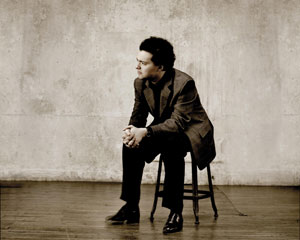
 There is a story, perhaps apocryphal, that after a concert given by Chopin, Liszt and Mendelssohn were walking through the streets of Paris when Mendelssohn asked Liszt why he was shouting. To which Liszt replied, “because I haven’t heard a fortissimo all evening”. No-one could have made such a complaint about Kissin’s performance of Chopin’s first concerto last night. Kissin is a huge man, a larger-than-life figure who looks like a Greek god when he sits down at the piano. He harnesses enormous power to a breathtaking technique, and, most impressively, to a strong sense of line, phrasing, and long-range structure.
Like most Russian pianists (including Ashkenazy), he comes ultimately from the pianistic tradition of Liszt. As I listened to this performance by a great Russian pianist, with the orchestra conducted by an equally great Russian pianist of a different generation, and aware that the orchestra was soon to embark on a Russian symphony, I was reminded of Rachmaninov’s performances, who also combined great power with surprising gracefulness. Chopin wrote both his concertos before he left Warsaw, and this performance underlined the tension between Italian opera and Slavic dance that characterized the musical scene in Russia as well as Poland at the time, and is seldom far from the surface in any of Chopin’s music.
Kissin was called back for three encores. His performance of Chopin’s second Scherzo was almost more remarkable, emphasizing its dramatic and rhetorical contrasts yet conveying the work’s structure so compellingly that it seemed to be all in one breath. Then he played the “minute” waltz, and finally the C# minor waltz, tender and infinitely moving.
Ashkenazy’s interpretation of Rachmaninov’s 2nd symphony had the integrity of a true believer, and was Russian to the core. I have never heard the first movement, and particularly its slow introduction, taken so fast; but far from glossing over its emotional depth Ashkenazy’s tempi heightened its passion and especially its rhetoric. And the orchestra responded eagerly – the many low string passages in the first movement glowed with intensity, the wind section danced its arabesques, and the brass snarled with heavy Russian irony.
The menacing violas on their C string in the second movement; the occasional lyrical interjections from the first horn (Robert Johnson); the descent of the double basses into uncertain realms; there were many individual felicities in this performance. I think I would single out the duet in the slow movement between oboe and cor anglais (Shefali Pryor and Alexandre Oguey) as a particularly plangent and expressive highlight. And when the haunting clarinet solo (exquisitely played by Lawrence Dobell) which opens the movement is taken up by the whole orchestra and developed, leading to one of the most satisfying climaxes in all symphonic music, Ashkenazy paced it perfectly.
The influence of Tchaikovsky on Rachmaninov is obvious in the lamenting, perhaps more self-indulgent music they both wrote, but Ashkenazy also brought out the reflections of Tchaikovsky’s balletic music in this score. And, rather than the usual slightly bombastic and improbable optimism of most performances of the finale, the SSO made it sound like a party of Russians endlessly drinking vodka and dancing Cossack dances. The energy was astounding.
It is a fantastic privilege to attend performances such as these. It raises us lesser mortals to Olympus for a moment.
Sydney Symphony Orchestra presents
Evgeny Kissin Plays Chopin
Conductor Vladimir Ashkenazy
Chopin, Piano concerto no 1 in E minor
Rachmaninov, Symphony no 2 in E minor
Venue: Sydney Opera House
Date: Saturday Sept 24, 2011
Bookings: www.sydneysymphony.com
Sydney Reviews
Evgeny Kissin Plays Chopin | Sydney Symphony Orchestra
- Details
- Nicholas Routley
Most read Sydney reviews
The Lark | Hey Dowling
Noni Hazlehurst brings Rose and The Lark to colourful and compelling life in this one-woman show.
Pride & Prejudice* (*sort of) | Neil Gooding Productions & Woodward Productions
This rollicking musical take on Jane Austen’s beloved novel is a side-splitting crowd pleaser.
Heartbreak Hotel | EBKM
Heartbreak Hotel invites its audience into an intimate portrait of the universal and isolating experience of heartbreak.
Current | Sydney Dance Company
While Bonachela’s work is, as always, dreamily lovely, for me the highlights were absolutely the three commissioned choreographers: Azzam Mohamed, Jenni Large and Raghav Handa.
The Gospel According to Paul – The Second Coming | Soft Tread Productions
The Gospel According to Paul is meticulously crafted entertainment. It’s uplifting without pulling any punches.
More from this author
The First Murder | Pinchgut Opera
In the care of Pinchgut Opera’s director, Erin Helyard, this music, formulaic as it indeed...Messa da Requiem | Queensland Ballet
Messa da Requiem was a quite stunning way to inaugurate the new auditorium.Ensemble Pygmalion | 2026 Adelaide Festival
There is no doubt that the three programs presented by the Ensemble Pygmalion were the sen...Mary said what she said | 2026 Adelaide Festival
Going from that show to Mary said what she said was like going from a Mozart piano concert...Marwood and Mustonen | 2026 Adelaide Festival
The whole work is a testament to Shostakovich’s constant battle with the thought police of...
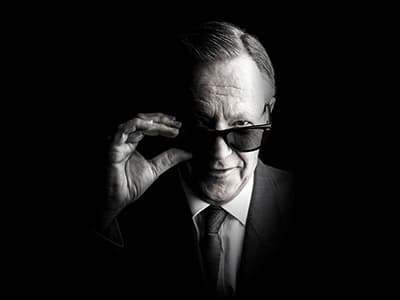
The Gospel According to Paul is meticulously crafted entertainment. It’s uplifting without pulling any punches.

While Bonachela’s work is, as always, dreamily lovely, for me the highlights were absolutely the three commissioned choreographers: Azzam Mohamed, Jenni Large and Raghav Handa.